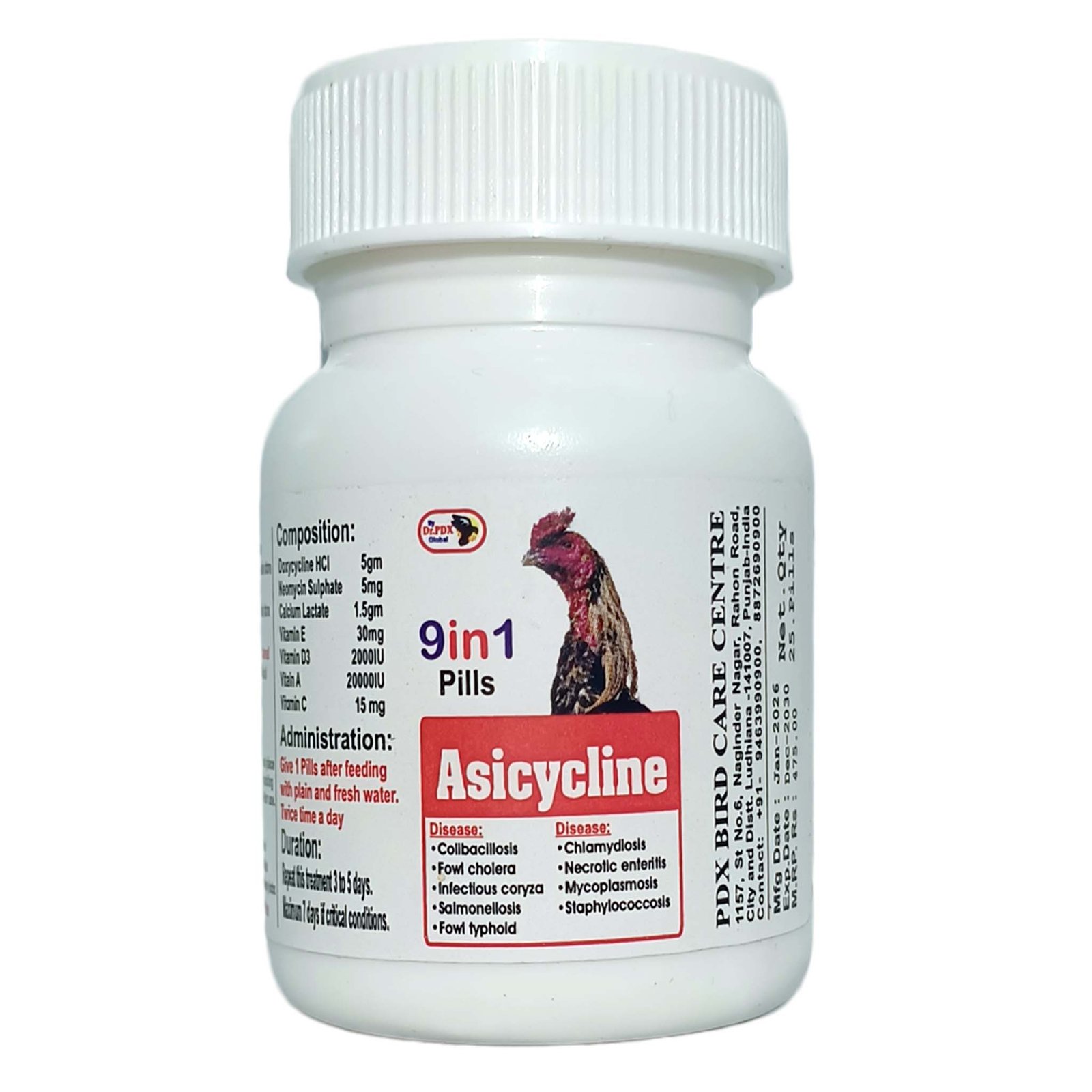
Prioritizing Aseel Rooster Health with Asicyclin 9in1 Powder or Pills
Ensure the well-being of your Aseel Rooster s with Asicyclin 9in1 Powder or Pills, a comprehensive treatment designed to combat critical diseases. This advanced formula offers rapid relief and promotes daily health improvements for Aseel Rooster s facing bacterial and viral infections. With Asicyclin Powder or Pills, you can rest assured that your birds are receiving effective care without the concern of harmful side effects.
Targeted Treatment for Common Aseel Rooster Ailments
Asicyclin Powder or Pills 9in1 provides targeted treatment for a range of common Aseel Rooster ailments, including:
Colibacillosis
Fowl cholera
Infectious coryza
Salmonellosis
Fowl typhoid
Chlamydiosis
Necrotic enteritis
Mycoplasmosis
Staphylococcosis
Recognizing the Symptoms: Be vigilant for symptoms such as green diarrhea, cough/phlegm, trichomonas, and mouth breathing, all of which can indicate underlying health issues in your Aseel Rooster s. Early detection and treatment are key to maintaining a healthy flock.
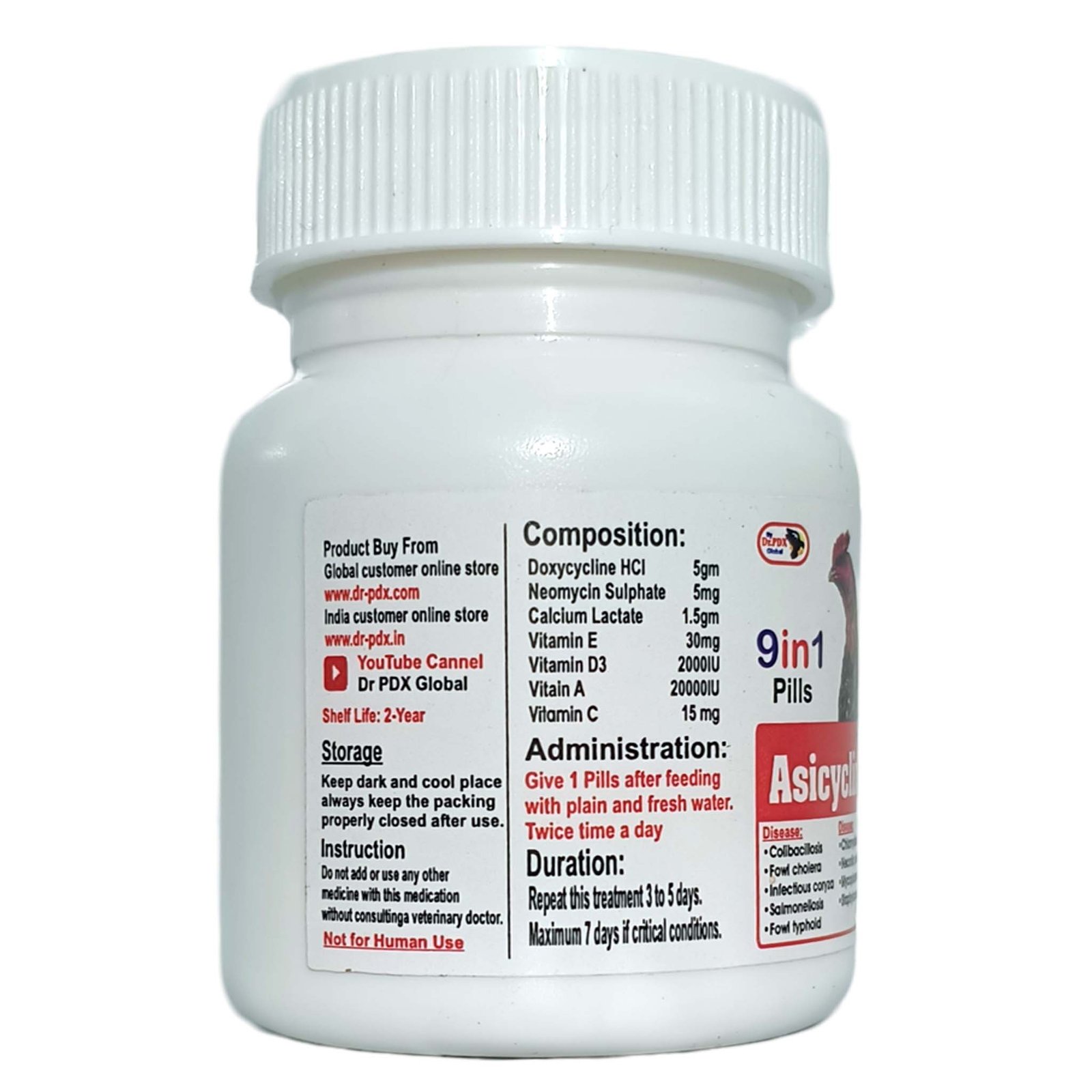
Dosage of Pills:
After Food(grain) Give 1-Pills each sick bird with 10-15ml plain and fresh water according to body weight. Twice time a day.
Duration: 3 to 5 days. For critical conditions, extend the treatment duration to a maximum of 7 days.
Storage Instructions: Store Asicyclin Powder or Pills Powder in a cool, dark place, away from heat and direct sunlight. Ensure the packaging is tightly sealed after each use to preserve its effectiveness.
Chronic Symptoms: Localized infection leading to swollen joints, footpads (bumblefoot), and torticollis (twisted neck).
Symptoms in Aseel Roosters
Severe Facial Swelling: Intense swelling around the eyes (periorbital) and wattles is common.
Nasal/Ocular Discharge: A thick, sticky, and foul-smelling, or pus-like, discharge from the nostrils and eyes.
Respiratory Distress: Sneezing, wheezing, and rales (rattling noises).
Eyes Closed: Extreme sinus swelling can cause the eyelids to stick together or close completely.
Behavioral Changes: Listlessness, decreased activity, reduced feed/water consumption, and diarrhea.
Wattle Edema: In roosters, swelling may extend to the wattles and intermandibular space.
Symptoms of Salmonellosis in Aseel Roosters & Chickens:
Diarrhea: Often white, watery, or frothy, particularly with Pullorum Disease.
Respiratory Distress: Labored breathing, gasping, or panting.
Lethargy and Weakness: Drooping wings, ruffled feathers, and a hunched, sleepy posture (sleeping while standing).
Reduced Appetite and Thirst: Drastic decrease in feed intake (anorexia).
Huddling: Birds often crowd together near heat sources, even when not cold.
Weight Loss and Emaciation: Thin, frail appearance.
Pale Comb and Wattles: Indicates anemia or severe dehydration.
Lameness/Swollen Joints: Specific Salmonella strains can lead to arthritis.
Sudden Death: Common in acute, severe cases, especially in young birds.
Symptoms in Aseel Roosters
Sudden Death & High Mortality: Often, the first sign is finding birds dead, with mortality rates reaching up to 50% or higher in severe outbreaks.
Diarrhea: Distinctive, yellowish-green to bright yellow watery diarrhea.
Pale/Anemic Head Parts: Combs and wattles become noticeably pale, dry, or shrunken due to severe anemia.
Depression & Weakness: Drooping posture, huddling, ruffled feathers, and reluctance to move.
Reduced Appetite & Increased Thirst: Inappetence (loss of appetite) leading to rapid weight loss, accompanied by high water consumption.
Respiratory Distress: Labored breathing or gasping in advanced cases.
Symptoms of Chlamydiosis in Aseel Roosters The symptoms of chlamydiosis in chickens are often non-specific and can appear suddenly, especially after a period of stress (e.g., shipping, overcrowding, or extreme weather). Key symptoms include:
Respiratory Distress: Labored breathing, coughing, sneezing, and nasal discharge.
Ocular Issues: Conjunctivitis (inflamed eyes), watery, or pus-filled eyes.
Distinctive Droppings: Lime-green or yellow-green diarrhea, which is often associated with liver damage.
General Illness: Lethargy, depression, weakness, ruffled feathers, and inappetence (loss of appetite).
Physical Changes: Rapid weight loss or emaciation.
Production Drops: A significant decrease in fertility and egg production in breeding birds.
Sudden Death: In acute cases, roosters may die suddenly without exhibiting prior, obvious signs of illness.
Clinical Symptoms (Acute Form)
Sudden Increase in Mortality: Often the first sign, with birds dying quickly, sometimes within hours of showing symptoms.
Severe Depression and Lethargy: Birds appear listless, reluctant to move, and weak.
Ruffled Feathers: Feathers look unkempt and dirty.
Diarrhea: Watery, foamy, or brown, and sometimes blood-tinged diarrhea.
Dehydration: Skin may appear dry and stick to the muscles.
Reduced Feed and Water Intake: Birds stop eating and drinking.
Respiratory Symptoms :
Sneezing and “Snicking”: Short, sharp, wet-sounding sneezes.
Rattling/Rales: A bubbling or rattling sound heard while breathing, especially at night.
Nasal Discharge: Runny nose or dirty, encrusted nostrils.
Foamy Eyes: Bubbly or watery discharge from the eyes.
Swollen Face/Sinuses: Facial swelling or puffiness, particularly around the sinuses and eyelids.
Open-mouth Breathing: Gasping for air in severe cases.
Symptoms of Staphylococcus in Aseel Roosters:
Bumblefoot (Pododermatitis): This is a very common localized infection in roosters, manifesting as a swollen, hot, and painful footpad. It often starts as a small cut, scab, or injury on the sole of the foot.
Lameness and Mobility Issues: Due to painful foot, joint, or bone infections (arthritis, synovitis, or osteomyelitis), the bird will show significant lameness, reduced activity, and a reluctance to walk or move.
Swollen Joints: Joints, particularly the hock joints, may appear swollen, hot, and contain excessive fluid.
Skin Infections and Abscesses: Localized, pus-filled, or necrotic (dead tissue) lesions on the skin, often on the breast, thigh, or legs.
Systemic Infection (Septicemia): In severe or advanced cases, the bacteria enters the bloodstream, causing