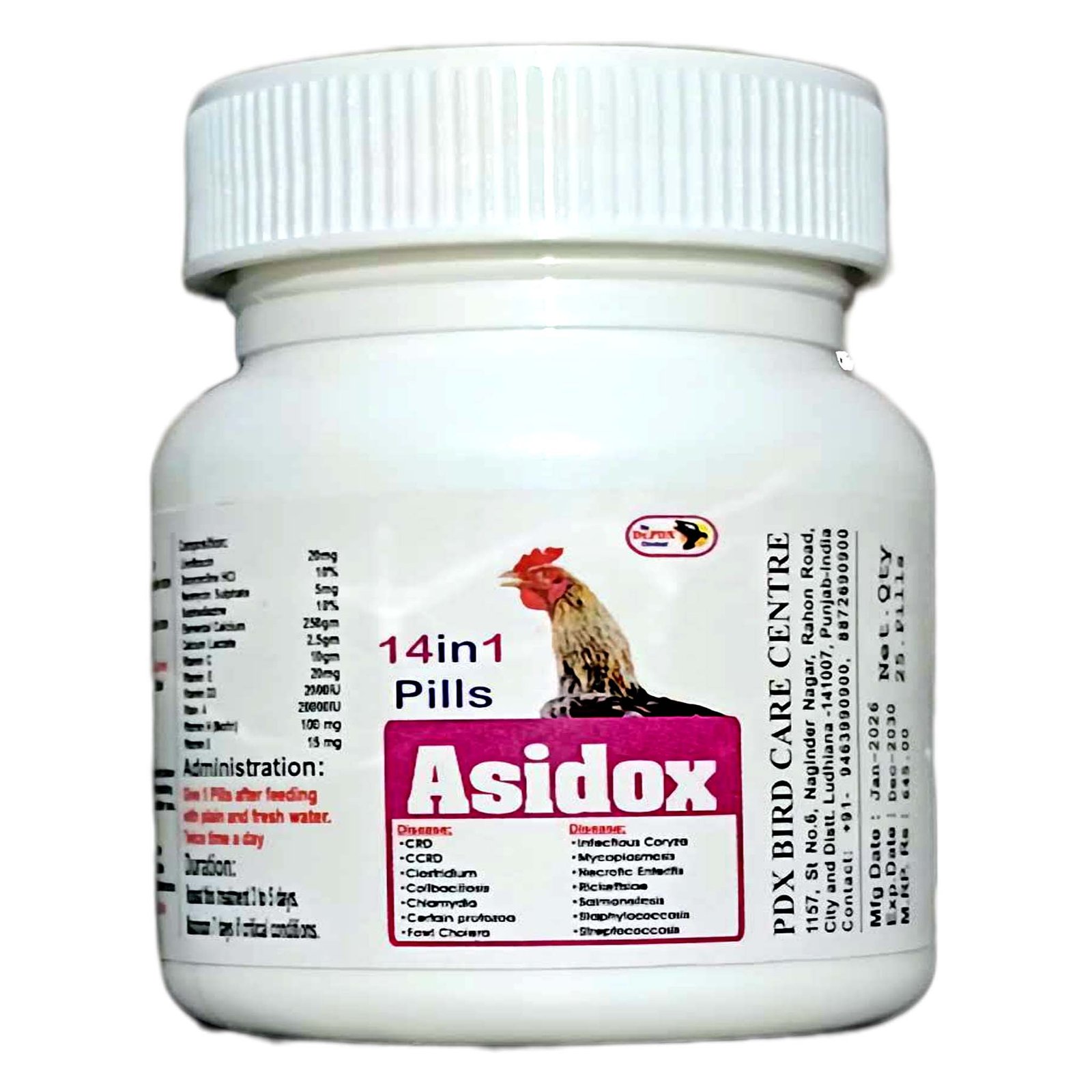
Protect your Rooster with Asidox 14in1 Powder Or Pills
Give your Rooster the care they deserve with Asidox 14in1 Rooster Treatment Medicine, a comprehensive solution targeting 14 viral and critical diseases. Designed to deliver relief with just the first dosage, this fast-results medication improves the health of your Roosters daily, with no harmful side effects. Whether dealing with gut infections or respiratory issues, Asidox 14in1 Powder or Pills ensures your birds recover quickly and effectively.
Disease Coverage & Symptoms
Asidox 14in1 Powder is crafted to combat a wide range of diseases, including:
CRD
CCRD
Clostridium
Colibacillosis
Chlamydia
Certain protozoa
Fowl Cholera
Infectious Coryza
Mycoplasmosis
Necrotic Enteritis
Rickettsiae
Salmonellosis
Staphylococcosis
Streptococcosis
Dosage and Storage Guidelines
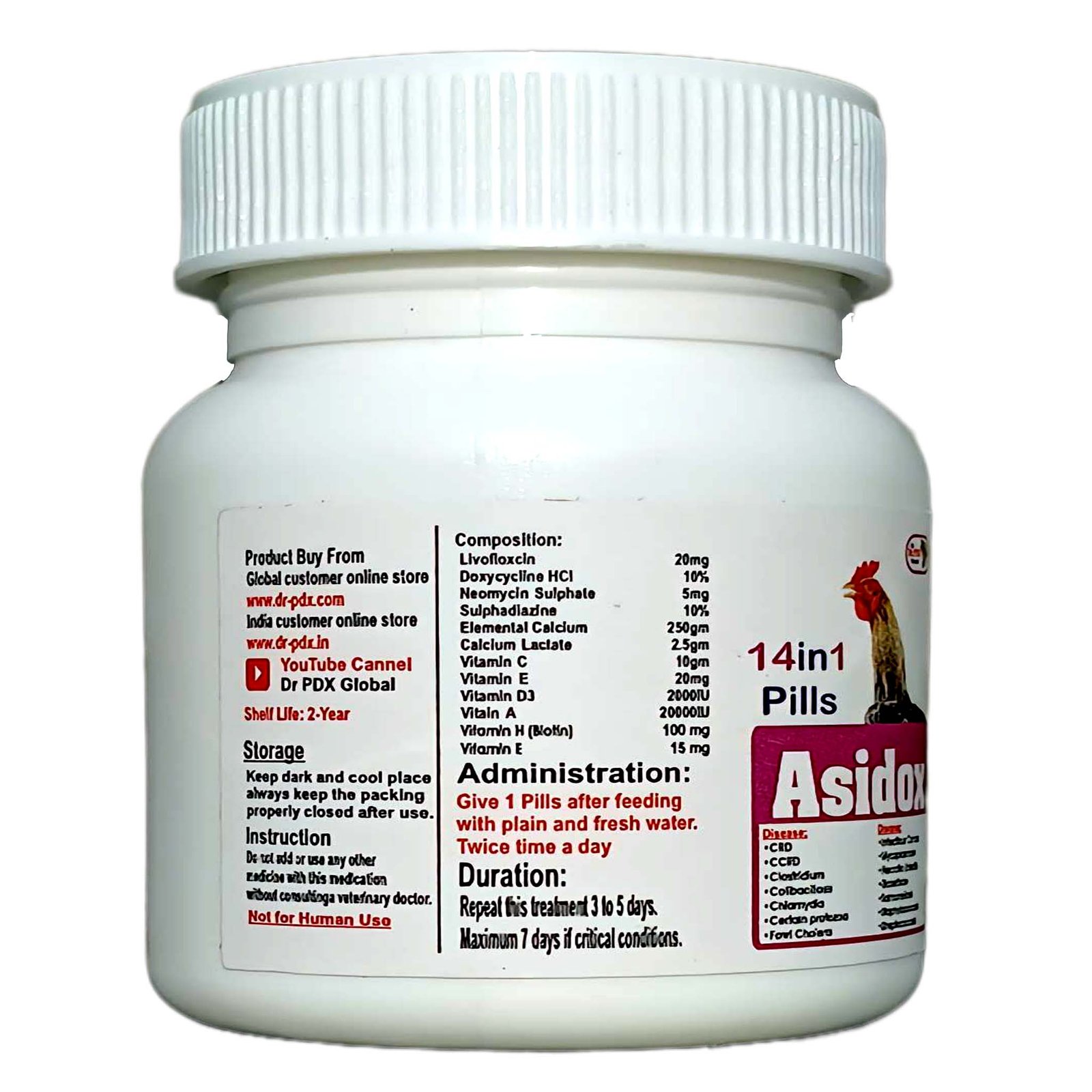
After Food(grain) Give 1-Pills each sick bird with 10-15ml plain and fresh water according to body weight. Twice time a day.
Duration: 3 to 5 days. For critical conditions, extend the treatment duration to a maximum of 7 days.
Storage Instructions: Store Asidox 14in1 Powder in a cool, dark place. Protect from heat and direct sunlight, Ensure the packaging is tightly sealed after use to maintain its effectiveness.
Protect Direct Sun and Place Cool and Dry, Close Product Cap Properly
HSN Code
23099090
MPN
DRPDX91055
Symptoms:
Symptoms of CRD in Aseel Roosters:
Respiratory Distress: Loud wheezing, snoring, rattling sounds (rales) when breathing, coughing, and sneezing.
Facial and Eye Symptoms: Swollen sinuses/face, bubbly or watery eyes, and nasal discharge.
Behavioral Changes: Lethargy, depression, and loss of appetite.
Physical Changes: Weight loss, ruffled feathers, and, in advanced cases, a “don’t care” or “staring” look.
Secondary Infection (Complex CRD): If the infection becomes complicated (CCRD) with E. coli, symptoms may worsen to include severe depression, greenish diarrhea, and a higher mortality rate.
Conditions Triggering CRD in Aseel Roosters
Cold/Damp Weather: Irritates airways, making them vulnerable.
High Ammonia Levels: Poorly ventilated, dirty coops.
Stress: Changes in environment, transport, or overcrowding.
Symptoms of CCRD in Aseel Roosters:
Respiratory Distress: Distinct, noisy breathing, including gurgling, rattling (rales), wheezing, or snoring sounds.
Severe Facial Swelling: Swollen sinuses, eyelids, and face, often leading to closed eyes.
Discharge: Watery or foamy discharge from the eyes (conjunctivitis) and nostrils.
Behavioral Changes: Severe lethargy, reduced activity, or the bird may look very weak and depressed.
Anorexia & Weight Loss: Loss of appetite, resulting in drastic weight loss and a thin appearance.
Physical Signs: Coughing, sneezing, and head-shaking.
Droppings: Thin, white, green, or red-colored feces.
Secondary Complications: If left untreated, the infection can cause lameness or joint swelling.
Post-Mortem/Severe Findings:
Air Sacculitis: Thickened, cloudy, or cheesy yellow substance in the air sacs.
Perihepatitis & Pericarditis: Fibrinous infection around the liver and heart.
Causes and Trigger Factors: CCRD is often triggered in Aseel by environmental stressors, such as:
Drafty, cold, or damp bedding.
Poor ventilation leading to high ammonia levels.
Overcrowding.
Vaccination or beak-cutting stress.
Symptoms of Clostridium (Necrotic Enteritis) in Roosters:
Sudden Death: The most common sign is birds dying suddenly with no prior symptoms, often with high mortality rates (up to 50% in severe, untreated cases).
Severe Depression & Lethargy: Affected birds appear listless, weak, and may stand in a hunched position with ruffled feathers.
Diarrhea: Watery, dark brown, or foul-smelling droppings. Bloody or mucoid droppings may also be present.
Anorexia: Complete loss of appetite and rapid weight loss.
Darkened Comb: The comb may appear dark, a sign of poor circulation and systemic illness.
Dehydration: Rapid weight loss and dehydration, sometimes resulting in skin discoloration.
Post-Mortem (Necropsy) Signs:
Ballooned Intestines: The small intestine is often distended with gas.
“Turkish Towel” Mucosa: The lining of the intestine has a rough, thick, or yellowish-brown pseudomembrane.
Liver Damage: The liver may be swollen, dark, and firm, sometimes showing small white necrotic foci.
Symptoms of Colibacillosis in Roosters:
Respiratory Distress: The most common sign, including coughing, sneezing, and laboured breathing due to airsacculitis.
Depression & Lethargy: Affected roosters often appear sluggish, have drooping wings, and are reluctant to move, sometimes sitting on their hocks (listlessness).
Ruffled Feathers & Poor Appearance: Birds may look unkempt and “puffed up” to maintain body temperature.
Reduced Appetite & Weight Loss: A significant drop in feed and water intake, leading to emaciation.
Diarrhoea & Soiled Vent: Whitish-greenish or watery diarrhea, often resulting in droppings matted around the cloaca (vent).
Cyanosis (Darkened Comb/Wattles): A pale or bluish tint to the comb and wattles due to septicemia (blood poisoning).
Joint Infections (Arthritis/Lameness): Swollen, painful joints and lameness, particularly in older birds.
Sudden Death: Often seen in acute forms of septicemia.
Post-Mortem Findings (Internal Symptoms):
Fibrinous Pericarditis: A thick, whitish, or yellow fibrous layer covering the heart.
Perihepatitis: Fibrinous, “cheesy” coating on the liver.
Air Sacculitis: Cloudy or thickened air sacs with milky or caseous fluid.
Peritonitis: Inflammation of the abdominal cavity.
Coligranuloma: Yellow, cheesy nodules (granulomas) found in the liver, intestines, and spleen.
Symptoms of Chlamydia in Aseel Roosters:
Respiratory Distress: Sneezing, coughing, nasal discharge, and gasping.
Eye Infections (Conjunctivitis): Runny, watery, or pus-filled eyes, swollen eyelids (blepharitis), and in severe cases, corneal damage.
Gastrointestinal Issues: Diarrhea, often with bright green or yellow droppings (due to liver involvement).
General Ill-thrift: Ruffled or unkempt feathers, lethargy, decreased appetite (anorexia), and weight loss.
Systemic Illness: Reduced vigor, drop in activity, and sometimes sudden death.
Key Considerations
Latency: Birds can carry the bacteria without showing symptoms and shed it intermittently through feces or respiratory secretions.
Transmission: Spread occurs by inhaling or ingesting dust from dried feces or respiratory secretions.
Zoonotic Risk: This disease can be transmitted to humans, causing flu-like symptoms or pneumonia (psittacosis).
Symptoms of Certain protozoa in Aseel Roosters:
1. Coccidiosis
Coccidiosis is a common, often fatal, disease caused by Eimeria protozoa that destroy the intestinal lining.
Symptoms: Severe diarrhea (which may be watery, mucous-like, or bloody), rapid weight loss, ruffled feathers, droopiness, lethargy, and reduced feed consumption.
Aseel-specific impact: Often results in emaciation, pale comb/wattles, and can occur even in winter if litter is damp.
2. Canker (Trichomoniasis)
Trichomonas gallinae is a motile, flagellated protozoan that primarily affects the upper digestive tract.
Symptoms: Yellowish, cheese-like, or white, sticky plaque-like lesions in the mouth, throat, crop, and esophagus.
Behavioral Signs: Difficulty swallowing, foul odor from the mouth, drooling, head shaking, and rapid weight loss.
Advanced Cases: Can cause “pendulous crop” (swollen/saggy) and, rarely, nervous system issues.
3. Histomoniasis (Blackhead Disease)
Caused by Histomonas meleagridis, this is a serious disease, often spread by cecal worms.
Visible Sign: While more common in turkeys, it can cause the “blackhead” symptom—a blue or dark purple discoloration of the head/comb.
4. Cryptosporidiosis
Cryptosporidium protozoa affect the intestines or, less commonly, the respiratory system.
Symptoms: Generally mild, but often presents as diarrhea and, in yellow-skinned breeds, can cause unnaturally pale skin.
Respiratory Form: Causes coughing and breathing difficulties.
Key Warning Signs in Aseel Roosters
If you observe the following combinations of symptoms in your Aseel, it is likely a parasitic or protozoal issue:
Watery/Greenish/Bloody Diarrhea: A key sign of coccidiosis or other intestinal parasites.
Cheesy Lesions: Yellow plaques in the mouth indicate Canker (Trichomoniasis).
Unthriftiness: A generally “unthrifty” look, with dull, sluggish movement, loss of appetite, and weight loss.
Pale Combes/Wattles: A sign of anemia caused by blood-sucking parasites, which can be linked with, or worsen, a protozoal infection.
Symptoms of Fowl Cholera in Aseel Roosters:
Acute Symptoms:
Sudden death: Often the first sign, with mortality occurring before other symptoms appear.
Cyanosis: Bluish-purple discoloration of the comb and wattles.
Diarrhea: Yellowish, grayish, or watery-greenish feces.
Respiratory Distress: Increased breathing rate, coughing, and mouth/nasal discharge.
General signs: Extreme lethargy, depression, ruffled feathers, and loss of appetite.
Chronic Symptoms:
Swelling: Localized, firm swelling of the joints, footpads, and wattles.
Head/Eye Infections: Swollen sinuses or eyes.
Weight Loss: Extreme weight loss and dehydration.
Post-Mortem Findings (Necropsy):
Hemorrhages (pinpoint bleeding) on heart and abdominal fat.
Enlarged, yellowish, or necrotic liver.
Symptoms of Infectious Coryza in Aseel Roosters:
Facial Edema/Swelling: Severe swelling around the eyes, face, and in the wattles (especially prominent in roosters).
Respiratory Distress: Sneezing, coughing, and rattling sounds.
Nasal/Ocular Discharge: Runny, malodorous discharge from the nostrils and eyes.
Eye Issues: Eyes may be half-closed or fully closed due to swelling.
General Malaise: Listlessness, depression, and reduced activity.
Decreased Intake: Drop in feed and water consumption, leading to weight loss.
Symptoms of Mycoplasmosis in Aseel Roosters:
Respiratory Distress: Sneezing, coughing, tracheal rales (rattling noise while breathing), and open-mouth breathing or gasping.
Facial/Eye Symptoms: Swollen sinuses (sinusitis) and eyelids, often causing the eye to close.
Discharge: Foamy or watery eye discharge and nasal discharge, which can stain feathers around the face.
Joint Issues (often M. synoviae): Lameness, swollen hocks or footpads, and reluctance to move due to pain.
General Condition: Reduced appetite, weight loss, and lethargy.
Key Characteristics
Chronic Nature: Infected birds remain carriers for life.
Environmental Triggers: Symptoms often worsen during cold, damp, or dusty conditions.
Secondary Infections: Co-infections (like E. coli) can cause severe, fatal, and more rapid disease, including severe airsacculitis.
Symptoms of Necrotic Enteritis in Aseel Roosters:
Sudden Increase in Mortality: The most common sign, often without prior warning, with mortality rates reaching 2%–50%.
Depression and Lethargy: Birds appear listless, with ruffled feathers, closed eyes, and a poor general state of health.
Diarrhea: Often dark-colored, watery, or foamy, leading to wet, soiled litter.
Dehydration: Birds exhibit severe dehydration, with skin that feels tight against the muscles.
Reduced Appetite: A noticeable drop in feed intake.
Subclinical (Hidden) Symptoms
Reduced Growth Rates: Stunted growth and weight loss.
Increased Feed Conversion Ratio (FCR): Birds require more feed to reach target weight.
Poor General Appearance: Reduced activity and lack of vigor.
Post-Mortem Findings (Necropsy)
Intestinal Damage: Small intestines (specifically the jejunum and ileum) are typically ballooned, friable (fragile), and filled with gas.
“Turkish Towel” Appearance: The mucosa is covered with a tan, yellow, or greenish pseudomembrane.
Foul Odor: A distinct, strong smell is present.
Liver Lesions: The liver may be dark red or black due to congestion.
Symptoms of Rickettsiae in Aseel Roosters:
High Fever and Depression: A, general, acute onset of sickness with lethargy, ruffled feathers, and weakness.
Respiratory Distress: Rapid breathing, open-beak breathing, and coughing.
Neurological Signs: Incoordination of limbs, ataxia, or paralysis (especially if weak or malnourished).
Cyanotic Comb and Wattles: The comb and wattles may become darkened or bluish (cyanotic).
Diarrhea: Often greenish or white in color.
Weight Loss and Muscle Wasting: A rapid decrease in body weight and, in extreme cases, necrosis of the skin.
Sudden Death: In acute cases, the bird may die without showing visible symptoms.
Transmission and Context Rickettsial bacteria are typically transmitted by parasites such as ticks, lice, mites, or fleas. In a free-range or backyard setting, a heavily infested Aseel rooster is at higher risk. The disease is often associated with a weakened immune system, poor nutrition, or concurrent infections like coccidiosis or worm infestations.
Symptoms of Salmonellosis in Aseel Roosters (Adults) Adult birds often show fewer, more subtle signs than chicks but can act as carriers.
Diarrhea: Frequently watery or mucoid, often with a white, yellowish, or greenish tinge.
Drop in Production: Decreased fertility and libido in breeding cocks.
General Malaise: Lethargy, depression, and a “droopy” or hunched posture.
Pale Comb/Wattles: Combs and wattles may appear pale or shriveled, indicating anemia or poor health.
Weight Loss & Emaciation: Reduced appetite and poor condition, leading to rapid weight loss.
Swollen Joints/Lameness: Some strains (e.g., S. enteritidis) can lead to arthritis or lameness.
Sudden Death: In some cases, particularly with Fowl Typhoid, birds may die suddenly.
Clinical Symptoms in Chicks/Young Aseel Chicks are highly susceptible and often experience severe, rapid illness.
White Diarrhea: Often referred to as “Bacillary White Diarrhea” (Salmonella Pullorum).
Huddling/Chilling: Chicks may appear cold and huddle together, often with their eyes closed.
Weakness & Dehydration: Extreme lethargy, refusal to eat, and fast fluid loss.
High Mortality: Death rate can exceed 50% in infected, young chicks.
Symptoms of Staphylococcus in Aseel Roosters:
Bumblefoot (Pododermatitis): The most common sign, involving hot, swollen, and painful footpads.
Lameness and Mobility Issues: Reluctance to move or stand, often preferring to sit.
Abscesses and Necrotic Lesions: Formation of firm, dead tissue masses on the feet, joints, or skin.
Joint and Tendon Infection (Arthritis/Tenosynovitis): Swollen, hot joints (especially hocks) and inflamed tendons, commonly leading to lameness.
Septicemia (Systemic Infection): In severe cases, symptoms include sudden death, depression, lethargy, decreased appetite, and sometimes, greenish diarrhea.
Skin Infections: Gangrenous dermatitis, resulting in dark red to blue-greenish, moist, and necrotic skin patches, especially on the breast and thighs.
Symptoms of Streptococcus in Aseel roosters include:
1. Acute Septicemic Form (Sudden Onset)
Sudden Death: Often, the first sign is finding birds dead without prior warning.
Respiratory Distress: Rapid breathing, panting, or open-beak breathing.
Cyanotic Comb/Wattles: Combs and wattles may turn dark blue or purple due to lack of oxygen.
Depression & Weakness: Lethargy, ruffled feathers, and huddling.
Diarrhea: Greenish or yellowish diarrhea is common.
Neurological Signs: In some cases, tremors, disorientation, or paddling movements.
2. Chronic Form (Long-term)
Lameness/Joint Swelling: Joints become hot, swollen, and painful (arthritis/synovitis).
Swollen Wattles: Abscesses may form in the wattles, similar to fowl cholera.
Reduced Body Condition: Weight loss and wasting of muscles.
Skin/Subcutaneous Lesions: Cellulitis or skin discoloration.
3. Key Diagnostic Findings
Internal Lesions: Post-mortem exams often reveal enlarged, congested, or necrotic (dead tissue) liver and spleen.
Heart Issues: Valvular endocarditis (small yellowish-white raised areas on heart valves).