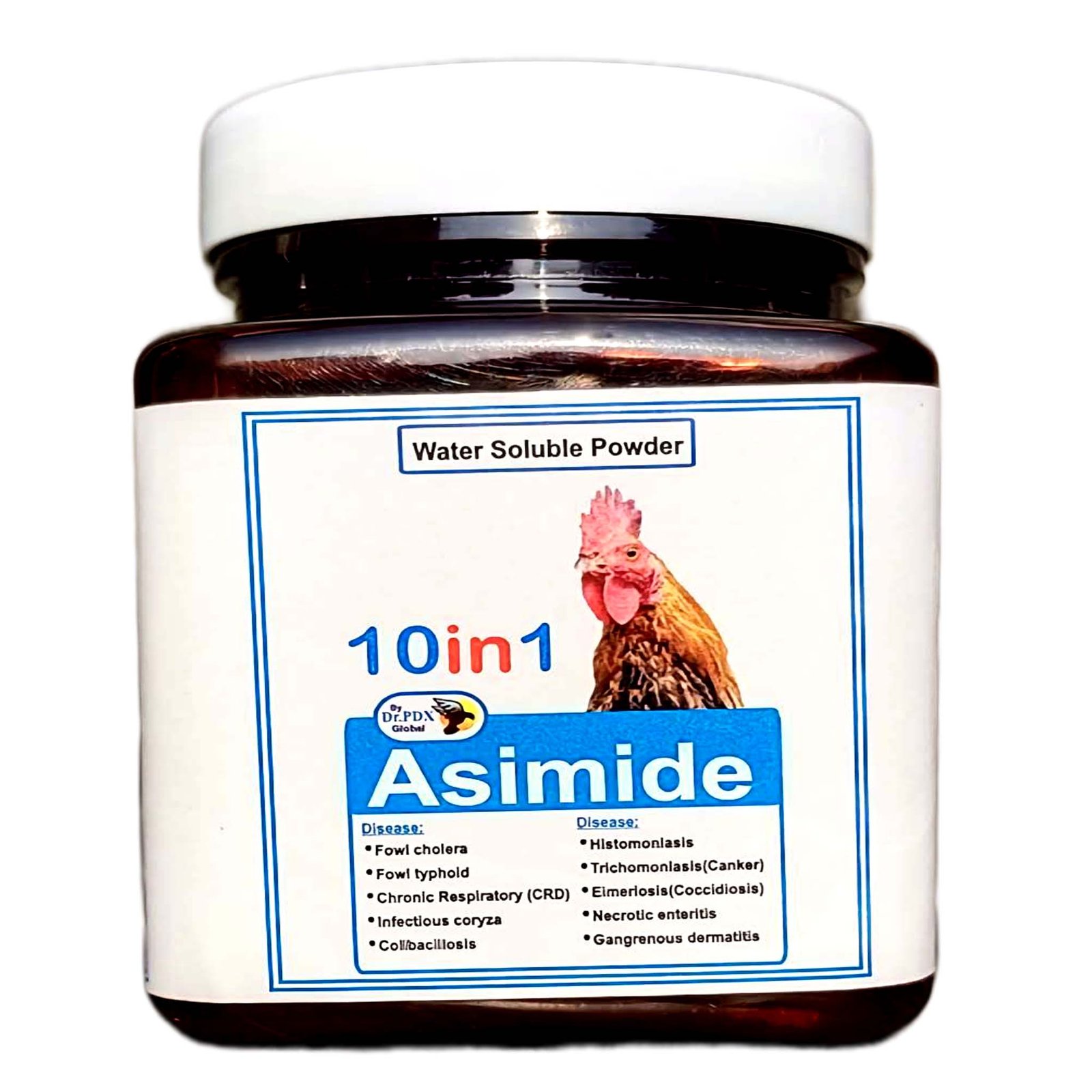
Ensure the health and vitality of your Roosters with Asimide 10in1 Powder or Pills, a comprehensive treatment designed to combat seven common and critical diseases. This powerful formula provides relief, often with the first dosage, and supports improved health conditions daily. Asimide 10in1 Powder or Pills is a very effective, fast-acting medication with no harmful side effects, giving you peace of mind.
Disease Coverage and Symptoms
Asimide 10in1 Powder or Pills effectively covers a broad spectrum of bacterial infections common in Roosters, including:
Disease:
Fowl cholera
Fowl typhoid
Chronic Respiratory (CRD)
Infectious coryza
Colibacillosis
Histomoniasis
Trichomoniasis(Canker)
Eimeriosis(Coccidiosis)
Necrotic enteritis
Gangrenous dermatitis
Dosage and Storage
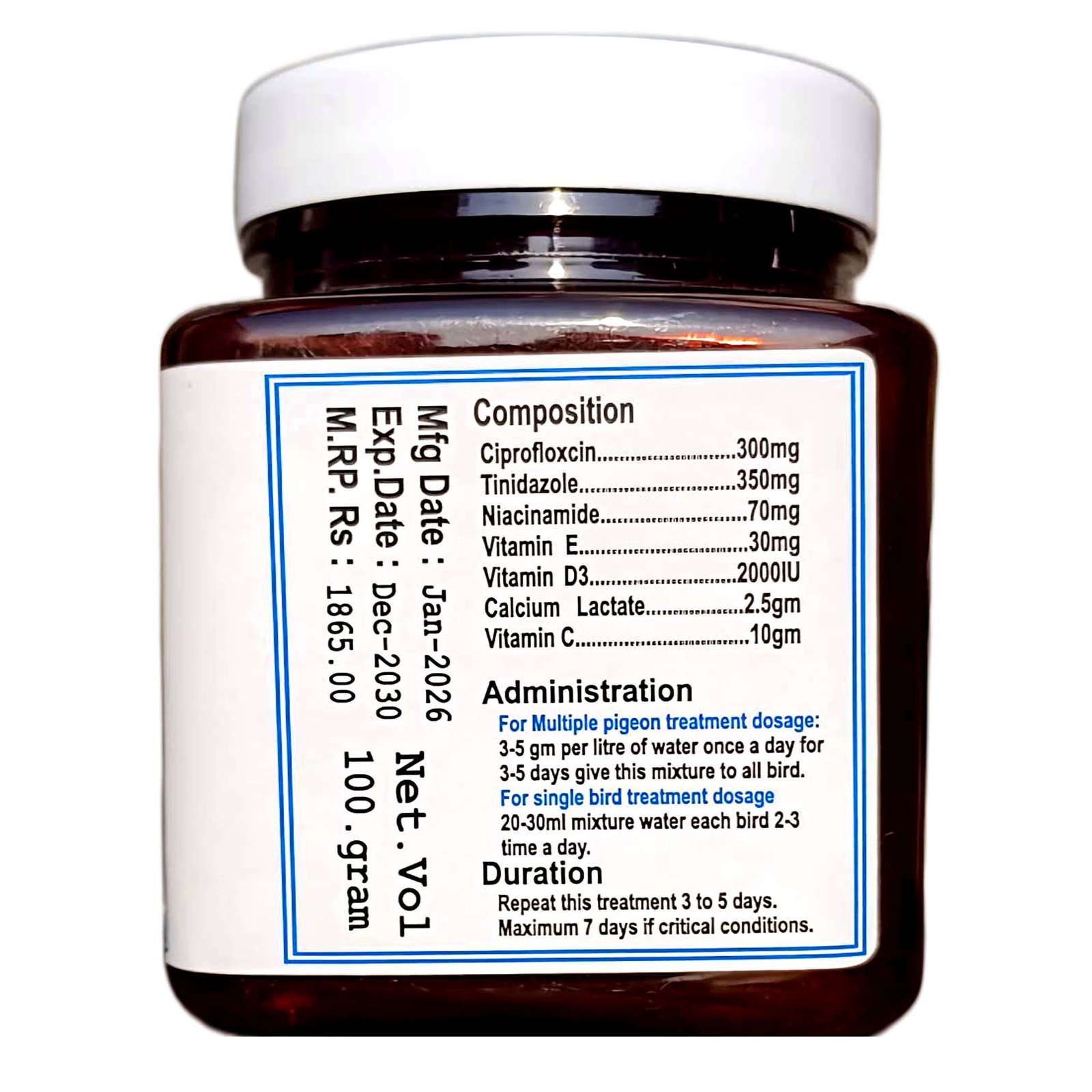
Dosage for Multiple Rooster Treatment: Mix 2-5 grams of Asimide Powder per liter of water. Administer this mixture once a day for 3-5 days to all birds.
Dosage for Single Bird Treatment: Mix 15-20 ml of the prepared water mixture and administer it to each bird 2-3 times a day.
Duration: Repeat the treatment for 3 to 5 days, extending to a maximum of 7 days in critical conditions.
Storage: Always store Asimide 10in1 Powder or Pills in a dark, cool place. Ensure the packaging is properly closed after each use to maintain its efficacy.
Depression and Lethargy: The rooster may appear listless, with ruffled feathers and a “puffed-up” look, reluctant to move or eat.
Reduced Feed/Water Intake: A noticeable drop in appetite leading to poor growth or rapid weight loss.
Diarrhea: Often yellowish or greenish-white, leading to soiled vent feathers.
Sudden Death: In acute septicemia (blood poisoning) cases, a previously healthy bird may die suddenly.
Swollen Joints and Lameness: Arthritis or swollen legs/wings, making it hard for the bird to move.
Swollen Head Syndrome (SHS): Swelling of the head and periorbital skin.
Symptoms of Histomoniasis in Aseel Roosters:
Sulfur-Yellow Diarrhea: This is the most classic sign, characterized by bright yellow or sulfur-colored, often foamy or watery droppings.
Lethargy and Depression: The bird becomes inactive, listless, and may sit with its eyes closed.
Drooping Wings and Ruffled Feathers: A generally unkempt appearance is common.
Reduced Appetite and Emaciation: Infected birds lose weight rapidly (emaciation) and stop eating.
“Blackhead” (Cyanosis): While more common in turkeys, the head, comb, and wattles may become dark or bluish due to poor blood circulation, which is the origin of the disease’s name.
Huddling: Affected birds may be seen standing alone in a huddled position.
Symptoms of Trichomoniasis (Canker) in Aseel Roosters:
Yellow/White Cheesy Plaques: The most common sign is the appearance of yellowish-white, sticky, or cheesy-looking growths (necrotic masses) in the mouth, throat, pharynx, esophagus, and crop.
Difficulty Swallowing and Drooling: The lesions make swallowing painful or impossible, leading to excessive saliva, a “wet” beak, and frequent, repetitive swallowing motions.
Breathing Difficulties: Large growths can obstruct the trachea, causing labored breathing, open-mouthed breathing, and sometimes a clicking or gurgling sound.
Foul Odor: A distinct, foul-smelling odor often emanates from the beak and mouth.
Rapid Weight Loss and Lethargy: Infected roosters often lose their appetite (anorexia), appear thin (“razor-keel”), ruffled, dull, and lethargic.
Pendulous/Swollen Crop: The crop may appear swollen, sag, or feel slow-emptying (crop stasis).
Secondary Symptoms: Watery eyes, diarrhea (often greenish), and, in rare cases, nervous system issues.
Symptoms of Coccidiosis in Aseel Roosters:
Bloody/Bloody-tinged Diarrhea: This is the primary indicator, often with feces ranging from mucoid to bright red or dark brown.
Rapid Weight Loss and Emaciation: Aseels often lose significant weight despite continued, though reduced, feeding.
Lethargy and Depression: Affected roosters become inactive, stand with eyes closed, and wings hanging down.
Ruffled Feathers: A common sign of illness, with birds appearing dirty or unkempt.
Pale Comb and Wattles: Anemia, indicated by faded, pale skin around the eyes and a pale comb/beak.
Huddling Behavior: Birds may huddle together as if cold.
Soiled Vent: The area around the vent is often soiled with diarrhea.
Symptoms of Necrotic enteritis in Aseel Roosters:
Sudden Increase in Mortality: Often the first and only sign; birds may be found dead in good condition.
Severe Depression and Lethargy: Affected birds appear tired, inactive, and may have closed eyes.
Ruffled Feathers: A sign of general malaise.
Diarrhea: Frequently, the droppings are dark, watery, foamy, or blood-tinged.
Dehydration: Birds become severely dehydrated, with skin sticking tightly to the muscles.
Reduced Feed/Water Intake: Inappetence.
Symptoms of Gangrenous dermatitis in Aseel Roosters:
Rapid Death: A sudden, sharp increase in mortality, often with little warning.
Skin Discoloration: Dark red, purple, green, or blue-green spots on the skin.
Lesion Location: Affected areas are usually on the wings, breast, abdomen, back, and thighs.
Feather Loss: Skin is often bare or with easily removable feathers.
Subcutaneous Edema (Gas/Fluid): A crepitating (crackling) feel under the skin caused by gas accumulation and jelly-like, blood-tinged fluid.
Behavioral Changes: Affected birds often show signs of depression, lack of appetite (anorexia), lethargy, and lameness or weakness.
Rapid Decomposition: Affected carcasses tend to decompose very quickly.