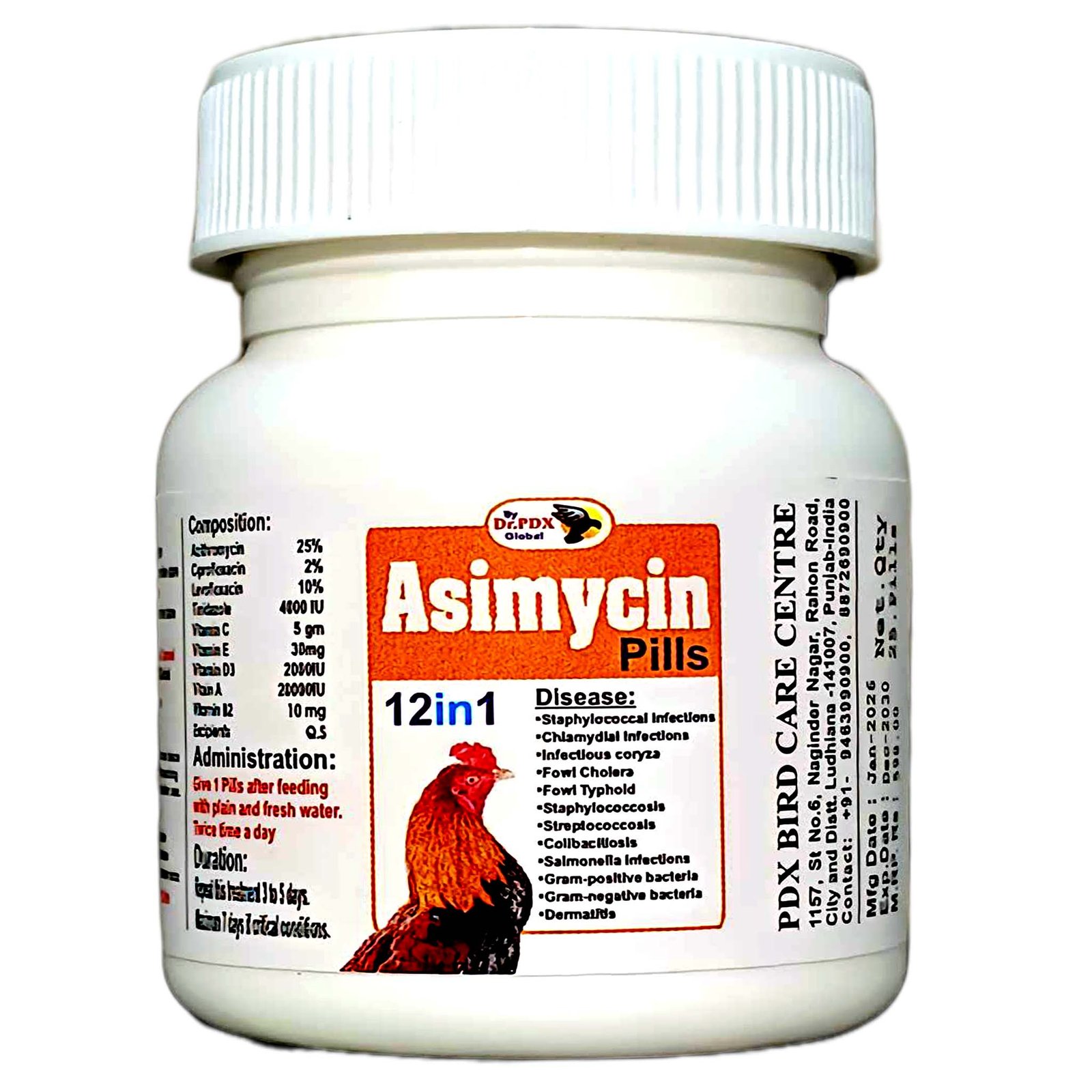
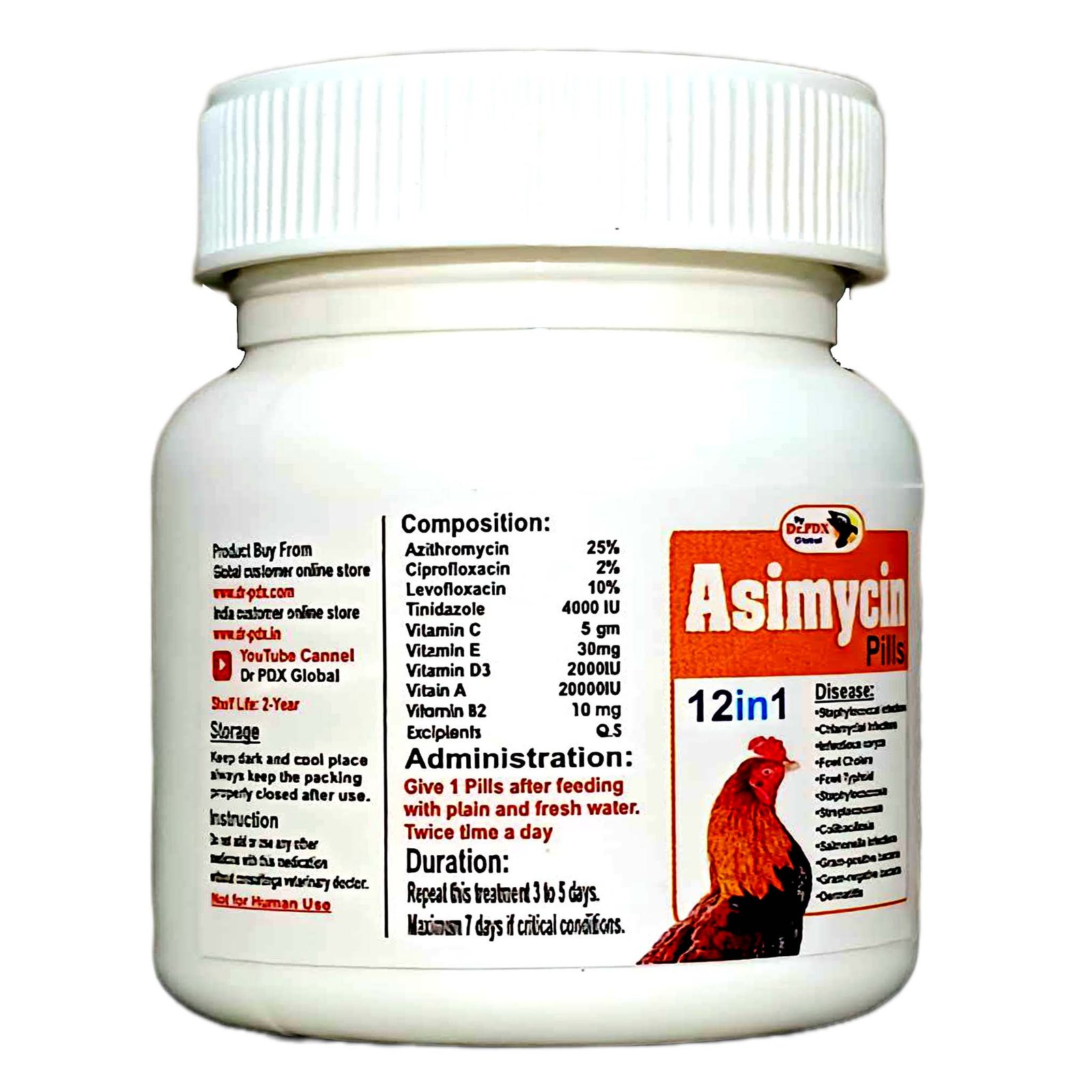
Aseel Rooster 12in1 Treatment medicine Asimycin Powder or Pills or Pills
Fast-Acting Relief from the First Dose
When your rooster face health challenges, time matters. AsimycinPowder or Pills starts working with the very first dosage, targeting critical infection zones and improving their condition swiftly. From reducing bacterial loads to addressing viral complications, this solution supports recovery by enhancing immune responses and directly fighting infection-causing agents.
A Comprehensive Approach to Rooster Care
Asimycin Powder or Pills doesn’t just treat infections; it prepares your rooster for long-term health. By addressing both gut and respiratory complications, this versatile product ensures a strong defense against multiple health challenges. Easy to administer, it fits seamlessly into your care routine, delivering reliable results to keep your rooster thriving in any environment.
Disease Coverage & Symptoms
Asimycin Powder or Pills or Pills is crafted to combat a wide range of diseases, including:
Staphylococcal infections
Chlamydial Infections
Infectious coryza
Fowl Cholera
Fowl Typhoid
Staphylococcosis
Streptococcosis
Colibacillosis
Salmonella infections
Gram-positive bacteria
Gram-negative bacteria
Dermatitis
Be vigilant for the following symptoms, which the Powder or Pills is proven to alleviate:
Tenodox 12in1 Powder or Pills or Pills helps restore your Roosters’ vitality with its targeted treatment approach.
Dosage and Storage Guidelines
After Food (grain) Give 1-Pills each sick bird with 10-15ml plain and fresh water according to body weight. Twice time a day.
Duration: 3 to 5 days. For critical conditions, extend the treatment duration to a maximum of 7 days.
Storage Instructions: Store Asimycin Powder or Pills in a cool, dark place. Protect from heat and direct sunlight, Ensure the packaging is tightly sealed after use to maintain its effectiveness.
Bumblefoot is very common in heavy, active birds like Aseel roosters, often caused by injuries to the footpads from perches, wire flooring, or sharp, hard ground.
Swollen Footpads: Significant swelling of the footpad and sometimes the shank.
Limping/Lameness: Reluctance to walk or stand.
Black Scab: A central, hard, dark-colored scab (abscess) on the bottom of the foot.
Heat: The infected area is hot to the touch.
2. Acute Systemic Infection (Septicemia)
If the bacteria enter the bloodstream, they cause a rapid, often fatal, systemic infection.
Sudden Death: High mortality, often with little warning.
Lethargy and Depression: The bird becomes listless, sits frequently, and has little appetite.
Watery Diarrhea: Frequently foul-smelling.
Cyanotic Comb/Wattles: The comb and wattles may turn blue or purple.
Joint Pain: Reluctance to move due to pain.
3. Chronic Infection (Arthritis and Synovitis)
When a systemic infection becomes chronic, it settles into joints and tendons.
Swollen Joints/Shanks: Hot, swollen joints, particularly the hock or foot joints.
Reduced Mobility: The bird is reluctant to move or stand.
Breast Blisters: Development of sores or abscesses on the breast.
Bumblefoot is very common in heavy, active birds like Aseel roosters, often caused by injuries to the footpads from perches, wire flooring, or sharp, hard ground.
Swollen Footpads: Significant swelling of the footpad and sometimes the shank.
Limping/Lameness: Reluctance to walk or stand.
Black Scab: A central, hard, dark-colored scab (abscess) on the bottom of the foot.
Heat: The infected area is hot to the touch.
2. Acute Systemic Infection (Septicemia)
If the bacteria enter the bloodstream, they cause a rapid, often fatal, systemic infection.
Sudden Death: High mortality, often with little warning.
Lethargy and Depression: The bird becomes listless, sits frequently, and has little appetite.
Watery Diarrhea: Frequently foul-smelling.
Cyanotic Comb/Wattles: The comb and wattles may turn blue or purple.
Joint Pain: Reluctance to move due to pain.
3. Chronic Infection (Arthritis and Synovitis)
When a systemic infection becomes chronic, it settles into joints and tendons.
Swollen Joints/Shanks: Hot, swollen joints, particularly the hock or foot joints.
Reduced Mobility: The bird is reluctant to move or stand.
Breast Blisters: Development of sores or abscesses on the breast.
Symptoms of Chlamydial Infections in Aseel roosters:
Oculonasal Discharge: Runny nose and watery/foamy eyes.
Conjunctivitis: Redness, swelling, and crusting around the eyelids.
Respiratory Distress: Sneezing, coughing, or difficulty breathing (dyspnea).
Gastrointestinal and General Health Symptoms
Diarrhea: Frequently, the droppings are bright green to yellowish-green.
Lethargy and Depression: The bird may appear sleepy, inactive, or unkempt.
Ruffled Feathers: The bird looks “puffed up” to maintain body heat.
Anorexia/Weight Loss: The bird may stop eating, leading to rapid emaciation.
Fever: Often indicated by drooping wings and listlessness.
Advanced or Chronic Symptoms
Neurological Signs: In some cases, the infection can cause tremors or torticollis (twisted neck).
Sudden Death: In highly virulent, acute cases, a rooster may die suddenly with little to no prior symptoms.
Chronic Infection: Some birds may appear healthy but act as carriers, shedding the bacteria.
Symptoms of Infectious coryza in Aseel roosters:
Severe Facial Swelling: Substantial edema around the eyes, which can cause them to close completely, and swelling of the wattles and intermandibular space.
Nasal/Ocular Discharge: A thick,, sometimes foul-smelling discharge from the nostrils and eyes.
Respiratory Distress: Sneezing, coughing, and rattling sounds during breathing.
Behavioral Changes: Listlessness, depression, and reduced activity.
Reduced Consumption: Decreased feed and water intake, causing rapid weight loss and emaciation.
Diarrhea: May occur in some cases.
Symptoms of Fowl Cholera in Aseel Roosters:
Acute (Sudden) Signs:
Sudden Death: Often, the first sign is finding otherwise healthy-looking birds dead.
Comb/Wattle Changes: Bluish, purple, or blackening of the comb and wattles due to cyanosis.
Diarrhea: Distinctive, bright green, yellowish, or gray watery, foul-smelling diarrhea.
Respiratory Distress: Coughing, labored breathing (dyspnea), and mucus from the beak.
Behavioral Changes: Severe depression, listlessness, and complete loss of appetite (anorexia).
Fever: High fever accompanied by increased thirst.
Chronic (Long-term) Signs:
Swelling: Swollen wattles, joints, foot pads, and face.
Lameness: Resulting from infected joints.
Torticollis: A twisted neck condition.
Symptoms of Fowl Typhoid in Aseel Roosters:
Drastic Changes in Appearance: Pale, shrunken, and sometimes scaly combs and wattles (anemia).
Diarrhea: Distinctive bright yellow or greenish-yellow, sometimes watery or mucoid, diarrhea.
Behavioral Shifts: Severe depression, lethargy, droopy posture, and isolation from the flock.
Physical Weakness: Ruffled feathers, extreme weight loss, and inappetence (loss of appetite).
Respiratory Distress: Labored breathing.
Symptoms of Staphylococcosis in Aseel Roosters:
Bumblefoot/Pododermatitis: This is the most common form, characterized by swelling, heat, and pain in the footpad.
Lameness and Mobility Issues: Reluctance to walk or stand, often favoring one leg or sitting frequently.
Abscesses and Necrosis: Development of pus-filled, hard, necrotic, or caseous (cheesy) lesions in the foot, joints (arthritis/synovitis), or tendon sheaths.
Systemic Symptoms (if the infection becomes widespread): Lethargy, depression, decreased appetite (anorexia), ruffled feathers, and sometimes greenish diarrhea.
Skin/Comb/Wattle Lesions: Gangrenous dermatitis may occur, appearing as dark red to blue-greenish, moist, and necrotic skin patches on the breast, thighs, or wattles.
Weight Loss: Due to chronic pain and inability to feed properly.
Symptoms of Streptococcosis in Aseel Roosters:
Acute Symptoms:
Sudden Death: Birds may die rapidly without showing previous symptoms.
Depression & Listlessness: Severe lethargy, with birds often found sitting in a hunched, prostrate position.
Respiratory Distress: Labored breathing, open-beak breathing, and gasping.
Cyanosis: The comb and wattles may turn blue or purple.
Diarrhea: Yellowish, green, or white diarrhea.
Blood-tinged Feathers: Blood may ooze from the mouth.
Chronic Symptoms:
Lameness & Joint Pain: Swollen, hot, and painful joints (arthritis).
Wasting: Significant weight loss.
Skin Infections: Cellulitis, or areas of skin devoid of feathers with blood-tinged edema.
Swollen Wattles/Comb: Abscessed, swollen, or dark-colored wattles and comb.
Symptoms of Colibacillosis in Aseel Roosters:
Respiratory Distress: Coughing, sneezing, snicking (clicking sound), and labored breathing due to airsacculitis.
General Malaise: Depression, lethargy, decreased appetite, and a “puffed-up” or ruffled feather appearance.
Diarrhea: Yellowish, watery, or whitish, often resulting in soiled feathers around the vent (cloaca).
Physical Changes: Dehydration (often seen as dry, dark skin on the shanks and feet).
Lameness/Joint Swelling: In some cases, the bacteria can cause arthritis or synovitis (swollen, painful joints).
Sudden Death: In cases of acute septicemia.
Chronic/Internal Symptoms (Often detected via post-mortem)
Fibrinous Pericarditis: A white to yellow cheesy layer covering the heart.
Perihepatitis: A fibrinous covering over the liver.
Air Sacculitis: Cloudiness and thickening of the air sacs.
Peritonitis: Inflammation of the abdominal cavity.
Coligranuloma (Hjarre’s disease): Nodules of cheesy, fibrous material on the intestines or liver.
Factors Triggering Infection
Poor Ventilation/Dust: High levels of dust and ammonia can damage the respiratory tract, allowing bacteria to enter.
Stress: Changes in weather, overcrowding, or transport.
Concurrent Disease: Follows outbreaks of Newcastle Disease, Infectious Bronchitis, or Mycoplasma.
Symptoms of Salmonella in Aseel Roosters:
Diarrhea: Often very, yellow, white, or green, and sometimes with blood or mucus.
Lethargy & Depression: The bird may appear weak, stand in a hunched position, or have its eyes closed (“sleeping while standing”).
Ruffled Feathers: A common sign of illness in chickens.
Weight Loss & Emaciation: Loss of appetite leads to a rapid reduction in weight.
Dehydration & Thirst: Increased water intake is often observed.
Comb and Wattle Changes: The comb and wattles may become pale (due to anemia) or discolored.
Lameness or Swollen Joints: Some strains of Salmonella can cause arthritis.
Sudden Death: In acute cases, a rooster may die suddenly without showing many symptoms.
Causes and Transmission
Contamination: Spread through contaminated feed, water, and litter.
Vectors: Rodents and wild birds are common carriers that introduce the bacteria to the coop.
Stress: High stress (e.g., changes in weather, overcrowding) can trigger an outbreak in an otherwise healthy-looking flock.
Symptoms of Gram-Positive Bacterial Infections in Aseel Roosters:
Lethargy and Depression: The bird may become inactive, appear sleepy, or sit in one spot with eyes closed.
Reduced Appetite and Weight Loss: A sudden drop in feed or water intake, leading to rapid weight loss or stunted growth.
Diarrhea: Often brown, yellow, or foul-smelling, and in cases of necrotic enteritis, may contain blood.
Swollen Joints and Lameness: Often associated with Staphylococcus or Enterococcus infections, causing the bird to struggle to move or walk.
Bumblefoot (Plantar Pododermatitis): A common, severe infection of the foot pad characterized by swelling, heat, pain, and abscess formation.
Ruffled Feathers and Poor Appearance: The bird may appear unkempt, with feathers that are dry, loose, or fluffed up.
Respiratory Distress: Labored breathing or gasping may occur if the infection has become systemic.
Sudden Death: In acute cases, such as fulminant necrotic enteritis, the bird may die suddenly without showing prior severe symptoms.
Key Bacterial Agents:
Clostridium perfringens: Causes Necrotic Enteritis (NE), characterized by gut damage and intestinal gas.
Staphylococcus aureus: Associated with bumblefoot, joint, and skin infections.
Enterococcus cecorum: Associated with lameness, arthritis, and spondylitis.
Symptoms of Gram-negative bacteria in Aseel Roosters:
General Appearance: Ruffled feathers, listlessness, lethargy, and a, hunched posture.
Respiratory Distress: Coughing, sneezing, gasping for air (open-mouth breathing), and nasal/ocular discharge.
Digestive Issues: Diarrhea, often greenish or yellow, and pasting of feathers around the vent.
Swelling and Joint Issues: Swollen wattles, comb, or joints (synovitis), often causing lameness or difficulty walking.
Neurological Signs: Incoordination, twisted neck (torticollis), or paralysis, which can occur in severe septicemic infections.
Sudden Death: In acute septicemic cases, death may occur without prior symptoms.
Specific Bacterial Infections
Colibacillosis (E. coli): Often causes green diarrhea, respiratory distress, and, in severe cases, septicemia, which may result in a thick, yellowish layer covering the liver and heart (fibrinous perihepatitis/pericarditis).
Salmonellosis/Fowl Typhoid (Salmonella): Characterized by diarrhea, dehydration, and increased thirst.
Fowl Cholera (Pasteurella multocida): Causes high mortality, fever, and, in chronic cases, swollen joints or wattles.
Symptoms of Dermatitis in Aseel Roosters:
Skin Discoloration: Dark reddish, purple, or blue-green, bruised-looking skin, particularly on the breast, thighs, legs, and wings.
Necrotic/Raw Areas: Moist, raw, or necrotic (dead) skin patches, often appearing as “wing rot” or “red leg”.
Subcutaneous Edema & Gas: Accumulation of fluid (edema) and gas under the skin, giving it a crepitating (crackling) feel upon palpation.
Feather Loss: Areas of skin affected by dermatitis are typically bare.
Pimples/Spots: Initial signs often include small pimples or blood-tinged spots on the skin that rapidly enlarge.
Lameness/Inactivity: Reduced activity, reluctance to move, and, in cases of severe leg infestation, a hunched posture.
Specific Condition: Scaly Leg (Knemidocoptes mutans)
Thickening of Skin: The legs/shanks become thick and rough.
White Crusty Scales: Raised, protruding, or crusty scales, often creating a white, chalky appearance on the legs.
Irritation: The bird may appear restless due to severe irritation.
Toe Loss: In severe, untreated cases, blood supply to the toes may be cut off, leading to necrosis and loss of digits.
General Clinical Signs
Sudden Death: Birds with gangrenous dermatitis often die within 24 hours of showing symptoms, frequently with no prior sign of illness.
Anorexia: Reduced food intake and general weakness.
Fever: Elevated body temperature.
Key Predisposing Factors
Skin Injuries: Scratches from wire, fighting, or fighting-related injuries.
Poor Hygiene: Wet, dirty, or damp litter environments.
Immune Suppression: Reduced immunity from diseases or stress.