Prioritizing Aseel Rooster Health with Asizith 4in1 Powder or Pills
Ensure the well-being of your Aseel Rooster s with Asizith 4in1 Powder or Pills, a comprehensive treatment designed to combat critical diseases. This advanced formula offers rapid relief and promotes daily health improvements for Aseel Rooster s facing bacterial and viral infections. With Asizith Powder or Pills, you can rest assured that your birds are receiving effective care without the concern of harmful side effects.
Targeted Treatment for Common Aseel Rooster Ailments
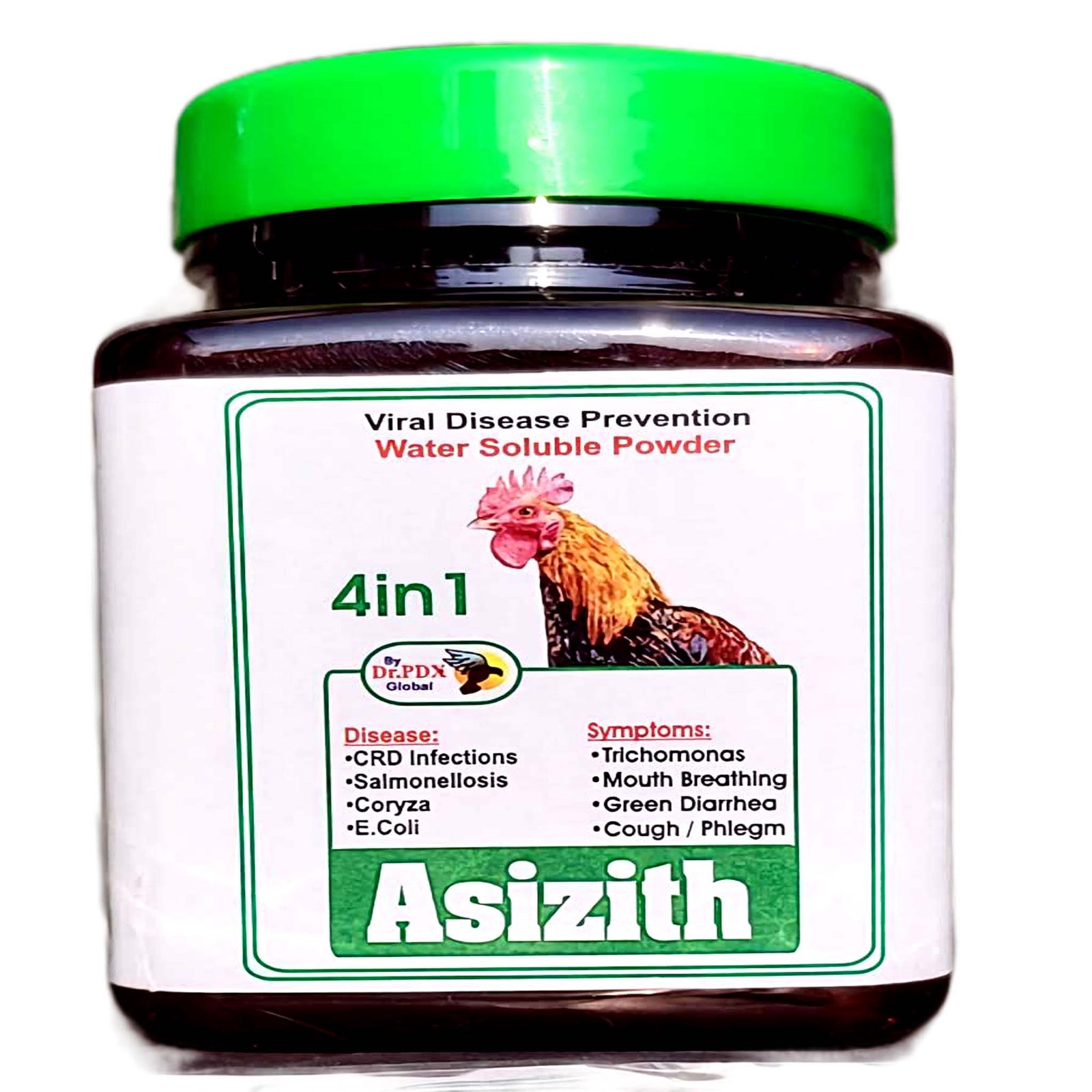
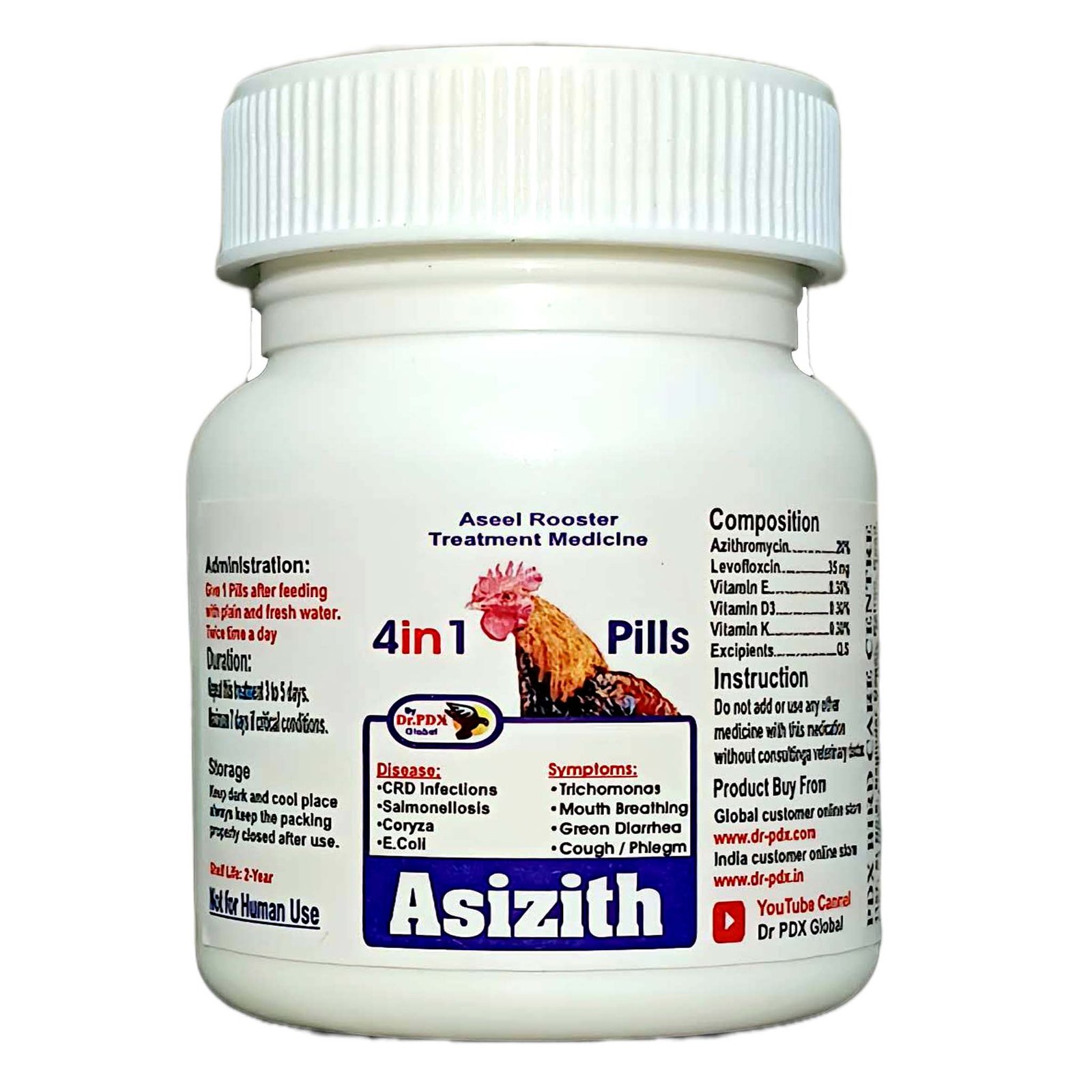
Asizith Powder or Pills 4in1 provides targeted treatment for a range of common Aseel Rooster ailments, including:
Disease:
CRD Infections
Salmonellosis
Coryza
E.Coli
Recognizing the Symptoms: Be vigilant for symptoms such as green diarrhea, cough/phlegm, trichomonas, and mouth breathing, all of which can indicate underlying health issues in your Aseel Rooster s. Early detection and treatment are key to maintaining a healthy flock.
Dosage, Storage, and Composition Details
Dosage of Powder:
Multiple Aseel Rooster Treatment: Mix 2-5 grams of Asizith Powder per liter of water. Administer this mixture once daily for 3 to 5 days to all birds.
Single Aseel Rooster Treatment: Mix 15-20 ml of the prepared water mixture and feed it to each bird 2-3 times a day. For critical conditions, extend the treatment duration to a maximum of 7 days.
Duration: 3 to 5 days. For critical conditions, extend the treatment duration to a maximum of 7 days.
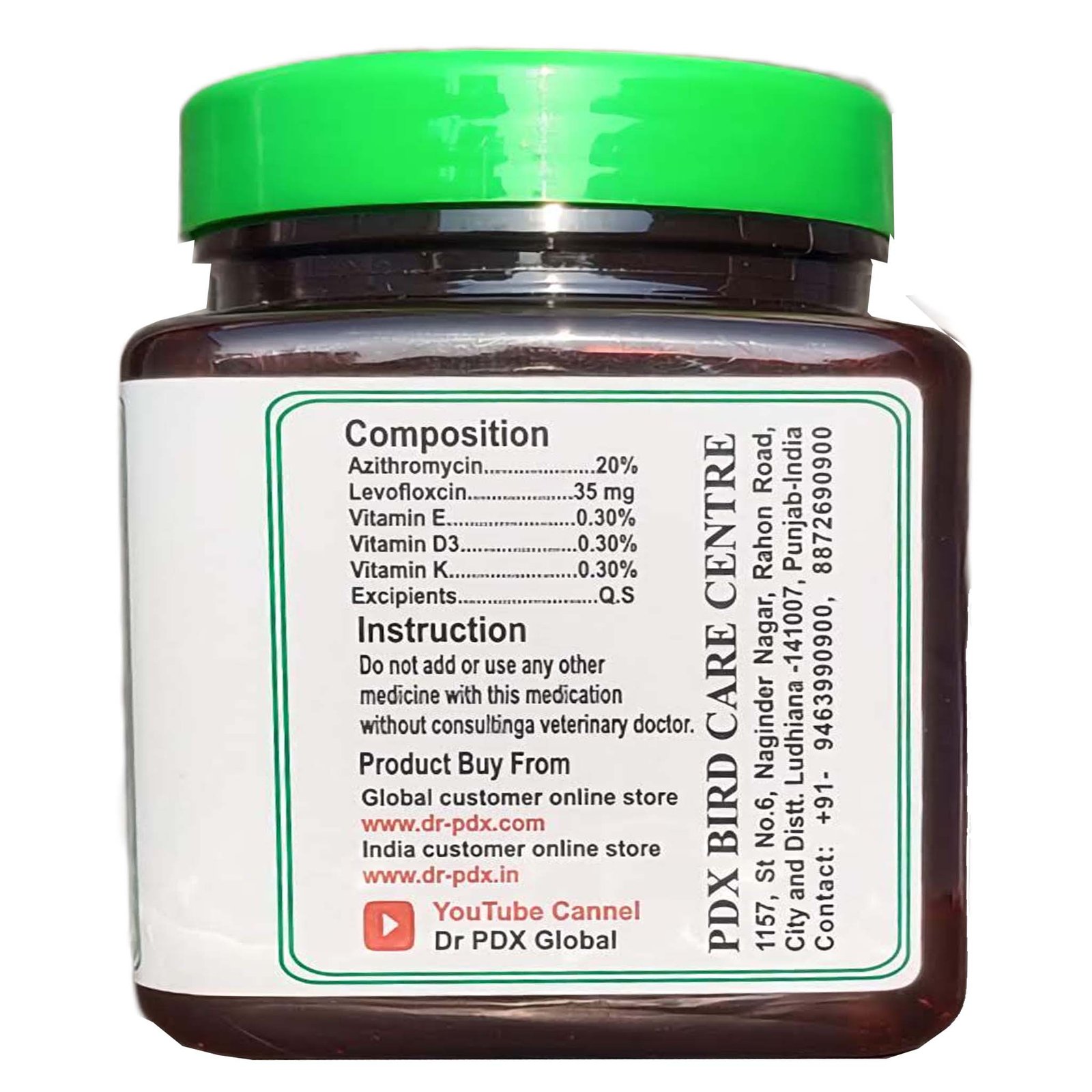
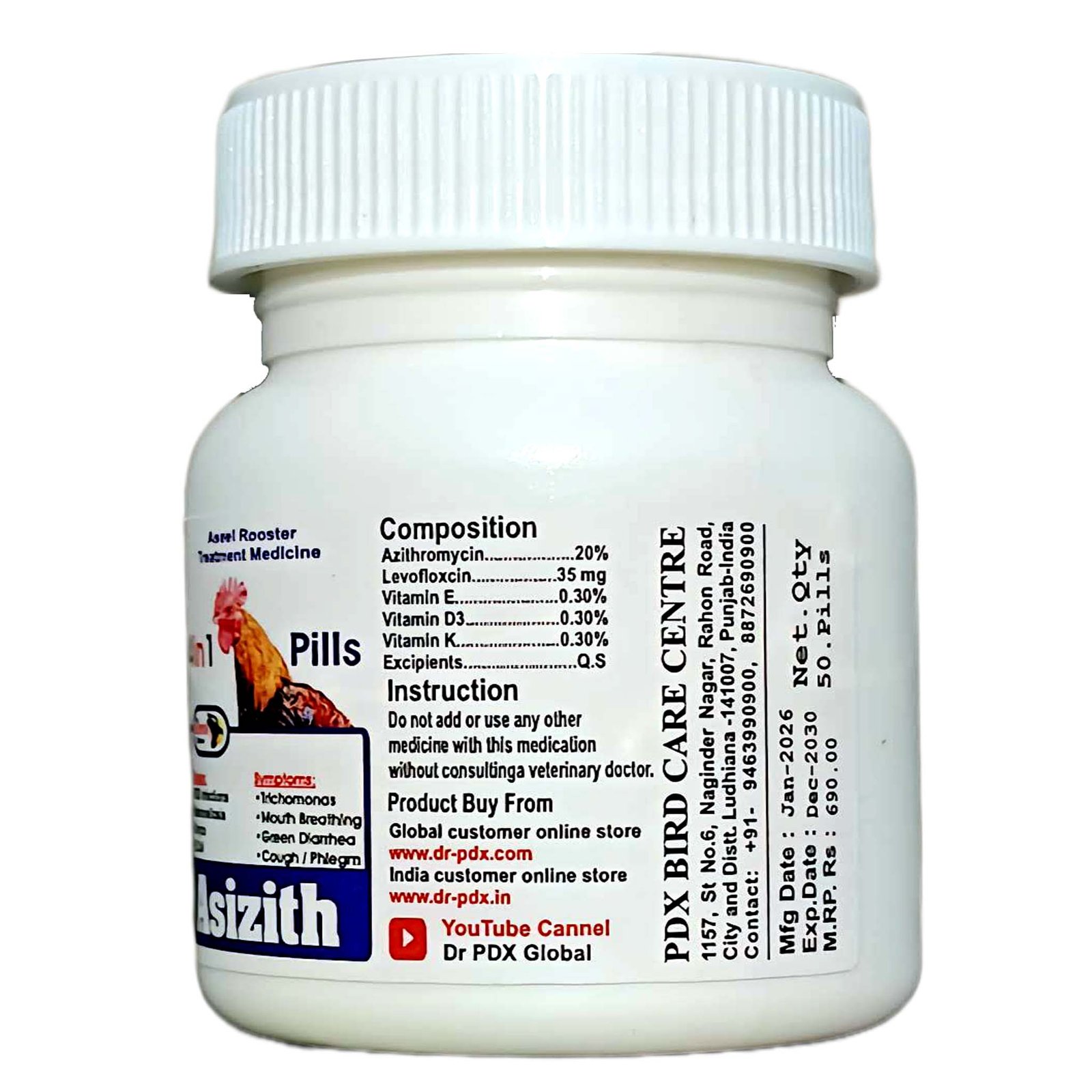
Storage Instructions: Store Asizith Powder or Pills Powder in a cool, dark place, away from heat and direct sunlight. Ensure the packaging is tightly sealed after each use to preserve its effectiveness.
Protect Direct Sun and Place Cool and Dry, Close Product Cap Properly
HSN Code
23099090
MPN
DRPDX91058
Symptoms
Symptoms of CRD in Aseel Roosters
Respiratory Distress: Sneezing, coughing, wheezing, and gurgling or rattling sounds (rales) when breathing.
Facial and Eye Issues: Swollen, puffy eyes (sinusitis) and foamy, bubbly, or watery discharge from the eyes and nostrils.
Physical Changes: Shaking head, mouth breathing (gaping), and in advanced cases, a “donut” shaped swelling around the eye.
Behavioral and Physical Decline: Lethargy, loss of appetite, significant weight loss, and reduced activity.
Productivity Drop (If applicable): Reduced fertility and sperm quality in roosters, or a drop in egg production if hens are infected.
Complicated Symptoms (CCRD): If combined with E. coli, the infection can lead to higher mortality, severe lethargy, and sometimes lameness.
Salmonellosis Symptoms in Adult Aseel Roosters:
Severe Lethargy & Depression: Birds appear droopy, weak, and stand with their head down or eyes closed.
Diarrhea: Often greenish, yellowish, or sometimes bloody diarrhea.
Pale/Shriveled Comb & Wattles: A significant indication of anaemia, fever, and severe, acute infection.
Loss of Appetite & Weight Loss: Reduced consumption of feed and water, leading to rapid emaciation.
Swollen Joints & Lameness: Salmonella can cause arthritis, leading to reduced mobility or a reluctance to move.
Sudden Death: In acute outbreaks, death can occur within 24-48 hours.
Increased Thirst: Dehydration caused by diarrhea leads to increased water consumption.
Symptoms of Coryza in Aseel Roosters
Facial Swelling: Pronounced swelling of the face, sinuses, and wattles is the most characteristic sign, which can cause eye closure.
Respiratory Discharge: Thick, sticky, or runny discharge from the nose and eyes.
Respiratory Distress: Sneezing, coughing, and rattling sounds (rales) while breathing.
Facial Odor: A distinct, foul odor often accompanies the disease.
General Malaise: Reduced activity, listlessness, and hunched posture.
Reduced Intake: A significant drop in feed and water consumption.
Symptoms of E. coli in Aseel Roosters
Behavioral/Physical: Extreme depression, listlessness, huddling with eyes closed, and standing in a hunched position, sometimes with the head tucked into the feathers or resting on the ground.
Respiratory: Labored breathing, gasping, coughing, and sneezing.
Digestive/Waste: Diarrhea, often with yellowish or greenish, mucous-filled droppings.
Appearance: Ruffled, unkempt feathers, often appearing “puffed up”.
Physical Changes: In severe or chronic cases, a distended abdomen (peritonitis) or signs of lameness due to joint infection.